
Take a stroll through historic Oakwood Cemetery in Weeping Water and use the clues to find the answers while learning about some of the town’s early residents. Please visit only during daylight hours and be respectful of the graves. Hint: All answers can be found in sections C and D.
Want to see the home where each of the families featured in this year’s scavenger hunt lived? Grab a map and take a stroll along the Heritage Trail Walk—a 3.2-mile, self-guided tour featuring 17 sites that highlight the history of Weeping Water. You can see the house at stop #5. Some of the original 20 acres were parceled out and changes were made to the home, but it still stands, along with the 1919 barn.
Clue No. 1
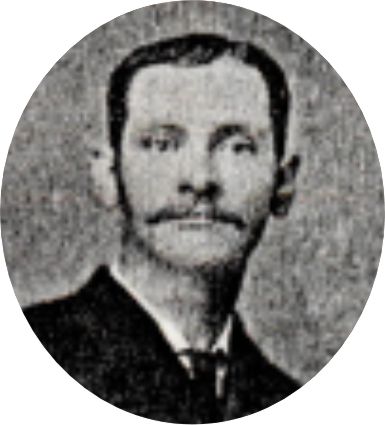
I was born in Lockport, New York, in 1824, and married Laura Kays in Wisconsin in 1850. We eventually settled in Cass County, where I served three terms as county judge and several years as justice of the peace in Weeping Water. We lived in Plattsmouth for a while, but eventually we built a home on a 20-acre farm just south of Weeping Water in 1875.
In 1915, our daughter Sylvia May fulfilled Laura’s wish of having a stone from our beloved farm as our grave marker. She arranged to have a large boulder moved from our former farm and engraved with our family name. Our youngest daughter, Dorothy “Kate,” taught in local schools and never married; she was laid to rest beside us in 1960. Look to the east of the boulder, and you will find my name: __________
Clue No. 2
My folks came to Nebraska in 1857, first settling in Fontenelle where my father was postmaster for two years before moving to Rock Bluff, where I, Issac Newton Hunter, was born in 1860. In 1861, the family moved to Weeping Water. I was too young to remember it, but our first home was a small log house at the foot of cemetery hill. My father later moved us to a farm 4 miles south of town. He earned his living by farming and running a stagecoach between Weeping Water and Plattsmouth. On Christmas day 1883, I married Emma Coglizer. Our first house was a dugout on the banks of the creek. Later we bought a home and several acres on the south edge of town from Judge Russell. We had 4 children, sons Alfred, Earl, Elwin, and a daughter. For many years I farmed, drove a stagecoach, and did carpentry, and in 1912 my son Earl and I purchased the Weeping Water Republican Newspaper. We published the paper together until we sold our interests in 1921.
Tragedy visited our home in 1902 when we lost our only daughter at age 4 during a Diptheria epidemic. Earl and Elwin were also sick but were saved by a new anti-toxin. Our family plot is located along the east side of the oldest section of the cemetery. Here I lie along with my wife, Emma Florence, our little daughter, my parents, Louis & Lovenia, and my brother George.
What was our little daughter’s name? ______________________
Clue No. 3
I was born in 1865, three years after my husband, Martin W. We married in Iowa on January 22, 1885, and for the next twenty-five years we followed his calling as a Mennonite preacher through Iowa, Colorado, and Nebraska. In 1910, we finally put down roots in Weeping Water, where Martin preached at the Mennonite church and we raised our three children, Ralph, Sadie, Lillian, and our adopted son Herman. Martin passed away in 1917.
In the years that followed, I devoted myself to my plants and garden and to traveling to see my children. I was visiting my daughter, Mrs. Lillian Marshall, in Los Angeles when heart trouble struck suddenly; I died on Mother’s Day, May 9, 1926. My children brought me home to rest beside Martin, in Section C. What is my name: ________________________
Clue No. 4
Flossie Wollen and I were both born in 1888. We married in 1915 and raised three children on our dairy farm at the south edge of town: Robert, Warren, and Florise “Vivian.” Our herd of cows and flock of chickens kept us busy. I also did quarrying and carpentry work. The former owner built a nice barn on the place in 1919, which came in handy with the cows.
In 1935, we leased part of our land to Company 751 of the Civilian Conservation Corps. Eight barracks rose just north of our house and barn, along with a mess hall, recreation hall, infirmary, automotive shop, and headquarters. The boys at the camp built a second chicken coop for us. The camp hummed with activity until 1942, then lay quiet for a time before serving again in 1944 as a POW camp for German soldiers.
Through all the comings and goings, Flossie and I stayed rooted to the farm. I lost my Flossie in 1962. She was laid to rest near her folks. I followed her the next year. What is my name: _________________________________________
Clue No. 5
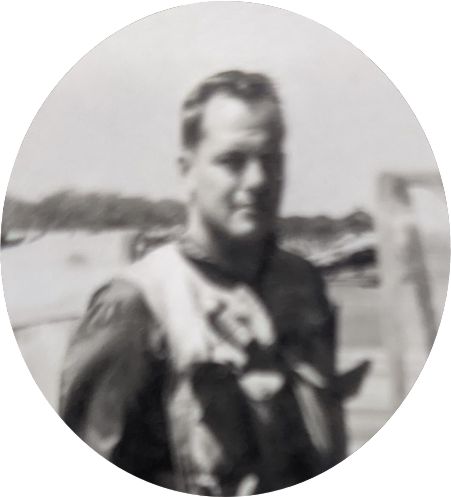
I was born in Weeping Water on November 26, 1919, and graduated from Weeping Water High School in 1940. One evening I stopped by my best friend Howard Johnson’s house to see what he was doing that night. He already had plans, so I asked his younger sister, Anne what she was up to. She said, “Let me go get dressed”—and that was that. Soon my sweetheart Anne boarded a train to join me in Wildwood, New Jersey, where I was stationed with the U.S. Navy. On February 2, 1944, we were married. Over the next 22 years, I served in many roles in the Navy and flew more than 36 different aircraft, all while Anne and I raised our three daughters: LouAnne, Nancy, and Susan.
I retired from the Navy in 1963, and we moved the family back to Weeping Water, where I operated the DX Station. For a short time we lived on the north side of town, but on a whim I attended the Baker farm auction on the south side in April 1964. I called Anne and told her I’d bought a house. She didn’t believe me! But soon we were fixing it up room by room.
After we moved in, Anne played a little trick on me. She hired Sears to convert an upstairs closet into a bathroom—at the time, we only had one bathroom with a clawfoot tub on the main floor. The Sears workers came every day while I was at the station, installing a bathtub with a shower, a sink, a toilet, light fixtures, and fresh paint on the walls. I commented a few times that I smelled paint, and Anne would just smile and reply, “No, I haven’t been painting.” One evening I came home and went to draw a bath, and she said, “Why don’t you take a shower?” I said, “What are you talking about?”—and she revealed the surprise. Never a dull moment in the Patterson household!
One of my proudest moments was being awarded the Distinguished Flying Cross for extraordinary achievement while participating in aerial flight as a fighter plane pilot in Bombing Squadron 80, embarked in the U.S.S. Ticonderoga, in the Philippine Islands on November 5, 1944.
Anne and I spent many good years in that house, until I had some heart trouble on December 1, 2002. She joined me here eight years later.
What is my first name: _________________